Showing posts with label Nature. Show all posts

Thursday, 15 June 2017

Truly Amazing And Beautiful Places to visit in Gilgit Baltistan Pakistan

If you are looking for the ultimate romantic destination with beautiful scenery, lakes, mountains and valleys, these stunning places in Gilgit Baltistan won’t disappoint.If you really want to experience paradise in this world, you should visit Gilgit Baltistan at least once. This place will make you fall in love with it.Gilgit Baltistan is the most spectacular region of Pakistan as well among world in terms of its geography and scenic beauty.In the spring season, the flowers and beautiful trees will make your visit unforgettable in the presence of lakes, hill stations and valleys. In the winter, skiing and all the snow activities are there for you to enjoy! There are many Places To Visit In Gilgit Baltistan to admire all the breathtaking views there. The beauty of Gilgit attracted tourists and they surely come here to visit and enjoy the natural beauty of this area.

An overview of the best places to visit in Gilgit Baltistan.


HUNZA VALLEY is Paradise on earth


Naltar is a scenic valley near Gilgit


Khalti Lake is located in Gupis Valley. It is quite famous for fresh water trout in the region


                                     Skardu Valley


Skardu Valley
Image source


Shangrila Lake


Rama lake is one of the famous lake in Pakistan Rama lake is located near the AstoreValley in Gilgit, Baltistan


Gulmit is a centuries-old town, with mountains, peaks and glaciers, located in Gojal valley in the upper Hunza region


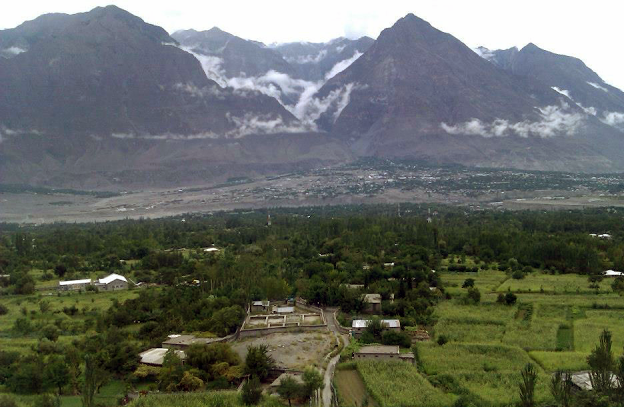
Danyore Village Gilgit is one of the beautiful place to visit in GB


Fairy Meadows

Fairy Meadows

No comments

Monday, 5 June 2017

Most Famous Endangered Animal Species That we could lose forever

Whooping crane

The whooping crane the tallest North American bird, is an endangered crane species named for its whooping sound. In 2003, there were about 153 pairs of whooping cranes.habitat loss and hunting drastically reduced the whooping crane population.  Before human interference, there were believed to be 15,000-20,000 whooping cranes, which fell to ~1400 in 1860 and then plummeted to an all time low of 15 birds in 1941.Captive breeding programs have boosted their numbers, and successful reintroduction efforts have raised the number of wild birds to several hundred.


Whooping crane
Image Source


Fishing cat

As its name implies, the fishing cat mainly feeds on fish and can dive into water to catch its prey.Since 2016, it is listed as Vulnerable on the IUCN Red List. Fishing cat populations are threatened by destruction of wetlands and declined severely over the last decade.These cats are typically found in a number of water habitats, including marshy thickets, mangrove swamps, and densely vegetated areas along rivers and streams.

Fishing cat
Image Source

Greater bamboo lemur

The greater bamboo lemur is a small primate despite its name, weighing only 2.5 kilograms and measuring between 25 and 46 centimetres overall.The greater bamboo lemur previously known as Hapalemur simus is arguably the most critically endangered lemur species in Madagascar .The population is currently estimated at less than 250 individuals (IUCN 2008).

Greater bamboo lemur
Image Source


Markhor

Markhor is a wild goat and one of the most beautiful wild animals inhabiting the mountainous regions of Pakistan.This species is assessed as Near Threatened: it nearly qualifies as Vulnerable under criterion C2a as there are less than 10,000 mature individuals (estimated 5,808, based on our analysis of data from 2011-2013) and each subpopulation, except one, has less than 1,000 mature individuals. The largest subpopulation had an estimated 1,697 mature individuals in 2011.

Markhor
Image Source


Philippine eagle

The Philippine eagle is the world’s largest eagle with a wingspan of up to 2 meters, a body length of 90 centimetres, and a weight of 4.5 to 8 kilograms.it is also one of the world’s rarest and certainly among its most critically endangered vertebrate species.Philippine eagles are still being shot or captured despite the presence of laws protecting them. Very often, they are killed without provocation, and mostly out of fear and ignorance, or worse, just for sport. At least one Philippine Eagle is killed every year because of shooting.

Philippine eagle
Image Source


Red panda

Red pandas can be easily distinguished by its unique ruddy coat color, which acts like camouflage in the canopy of fir trees where branches are covered with clumps of reddish-brown moss and white lichens.The red panda has been classified as Endangered by the IUCN because its wild population is estimated at less than 10,000 mature individuals and continues to decline due to habitat loss and fragmentation, poaching, and inbreeding depression, although red pandas are protected by national laws in their range countries. Due to Human encroachment, illegal hunting and poaching there have been drastic declines in the Red Panda population numbers with these populations also being pushed into more separate, isolated areas.

Red panda
Image Source


Polar bear

Polar bears are classified as marine mammals because they spend most of their lives on the sea ice of the Arctic Ocean.Most polar bears occur north of the Arctic Circle to the North Pole. There are some populations south of the Arctic Circle in Hudson Bay, Manitoba, Canada.There are currently 8 of the 19 species of Polar Bears out there with a status of vulnerable. This is due to the drop in their numbers and concerns that if that continues they will become extinct. Seismic blasting, construction, transportation and operation of oil facilities can negatively affect polar bears.

Polar bear
Image Source


Saola

A Saola has two parallel horns at the top of its head. Its horns are straight with a slight bend at the tip.The saola, one of the most critically endangered species in the world and on the IUCN red list, is a very rare and distinct species that was discovered only around a couple of decades before in May 1992, often called the “Asian Unicorn.” The main threats to the saola are hunting and fragmentation of its range through habitat loss.

Saola
Image Source


Red wolf

The red wolf also known as the Florida wolf or Mississippi Valley wolf is a canid of unresolved taxonomic identity native to the eastern United States. It is generally, morphologically, an intermediate between the coyote and gray wolf, and is of a reddish, tawny color.The red wolf is a distinctly different species from the gray wolf.Threats to the red wolf include habitat loss due to human development, negative attitudes that hinder restoration, severe weather, deaths by motor vehicles, and illegal killings.

Red wolf
Image Source


Island fox

The island fox is a small fox that is native to six of the eight Channel Islands of California.The island fox, which only a short time ago was on the brink of extinction, provides an instructive example of how a coordinated, organized and highly focused strategy was able to reverse the certain extinction of an endangered population. At the turn of the century, as few as 55 foxes barely survived in the wild on Santa Cruz Island; only 15 remained on nearby Santa Rosa and San Miguel Islands.

Island fox
Image Source
No comments

Monday, 8 May 2017

Most Dangerous Road in The World That Take Your Breath Away

 These are 10 of the most dangerous roads in the world!These roads have high death rates and are extremely dangerous.The list includes cliff top single track roads, some laden with bandits and others with deadly drops. 


Zoji La, India

Zoji La is a high mountain pass in Jammu and Kashmir, India, located on the Indian National Highway 1D between Srinagar and Leh in the western section of the Himalayan mountain range.Zoji La is 9 km (5.6 mi) from Sonamarg and provides a vital link between Ladakh and Kashmir Valley. It runs at an elevation of approximately 3,528 metres (11,575 ft), and is the second highest pass after Fotu La on the Srinagar-Leh National Highway.From Sonamarg in Jammu and Kashmir , the distance of Zoji La Pass is 9 km (5.6 mi). The pass functions as a major link between Ladakh and Kashmir but it is often closed during winter due to heavy snow, which can be anywhere between 15 and 24 metres deep. Zoji La Pass is one of the most dangerous mountain passes in India.


Zoji La, India
Image source


Guoliang Tunnel, China

The Guoliang Tunnel is carved along the side of and through a mountain in China. The tunnel links the village of Guoliang to the outside through the Taihang Mountains which are situated in Huixian, Xinxiang, Henan Province of China.The length of the tunnel is about 1200 meters, while the length of the mountain route is much longer. The average width of the road is just 4 meters which makes it extremely difficult and dangerous to overcome.Guoliang Tunnel is one of the most famous tunnels in the world.The magnificent tunnel road in the Taihang mountains was built by 13 local villagers headed by their chief, Shen Mingxin, and took around five years to finish. The Guoliang tunnel is another addition to most dangerous and complicated roads to travel.


Guoliang Tunnel, China
Image source


Yungas Road, Bolivia

The North Yungas Road (also known as Grove's Road, Coroico Road, Camino a Los Yungas, Death Road, Road of death or Road of fate is a road leading from La Paz to Coroico, 56 kilometres northeast of La Paz in the Yungas region of Bolivia.This is one of the few routes that connects the Yungas region of northern Bolivia to the capital city.Yungas Road, grimly known as ‘Death Road’ due to its notoriously high death rate, was cut into the side of the Cordillera Oriental Mountain chain in the 1930s by Paraguayan prisoners during the Chaco War.It begins at 15,400 feet and for an estimated 300 people a year ends in the loss of their life, yet Bolivia's North Yungus Road - better known as 'The Death Road' - is among the nation's biggest drawcards for thrill-seeking tourists.


Yungas Road, Bolivia
Image Source

Trans-Siberian Highway

The Trans-Siberian Highway is the unofficial name for a network of federal highways that span the width of Russia from the Baltic Sea of the Atlantic Ocean to the Sea of Japan of the Pacific Ocean.The road stretches over 11,000 kilometres (6,800 mi) from St. Petersburg to Vladivostok.


Image Source 


Karakoram Highway

The N-35 or National Highway 35 known more popularly as the Karakoram Highway and China-Pakistan Friendship Highway, is a 1300 km national highway in Pakistan which extends from Hasan Abdal in Punjab province of Pakistan to the Khunjerab Pass in Gilgit-Baltistan, where it crosses into China and becomes China National Highway 314.The Karakorum Highway connects China and Pakistan across the Karakoram mountain range, through the Khunjerab Pass, at an elevation of 4,693 metres above the sea level. The road is one of the scariest and hair raising jeep trip in the world.Riding along the highway to take in the spectacular view becomes extremely dangerous at various points as the paved international highway has been cut through the highest and the mightiest mountains of the world, The Himalayas and The Karakoram.The highway is open around the year, though the tourist time is usually from May till late November and beware closures on religious or public holidays.


 Karakoram Highway
Image source


Siberian Road to Yakutsk (Russia)

Siberian Road to Yakutsk, Eastern Part, Russia. The highway connecting Moscow with the famous Yakutsk is the world’s coldest place outside Antarctica continent.It runs parallel to the Amur–Yakutsk Mainline railway. It takes its name from the Lena River, which runs more or less north-south in this part of Siberia.Road to Yakutsk This is the official federal-government highway to Yakutsk, and it is also the only one to get there. As there are no other roads,During the winter, which is approximately ten months long, driving in and out of Yakutsk is subject to heavy snow, ice, and reduced visibility.


Siberian Road to Yakutsk (Russia)
Image source

Atlantic Ocean Road, Norway

Located in the midwest part of the Norwegian coastline, the Atlantic Road is one of the most scenic drives in the world.The Atlantic Road takes you on a unique journey close to the powerful Atlantic Ocean. This National Tourist Route opened in 1989, and is considered the most beautiful road trip in the world by some, thanks to the combination of modern engineering and spectacular natural surroundings.This fantastic and spectacular road is a very popular tourist attraction. Both the local population and tourist visitors frequently use the road to go fishing for cod and other fish directly from the bridges. One of the bridges is special designed for fishing.Driving along the Atlantic Road is like teetering on the edge of the sea. Waves crash over the pavement during storms.


Atlantic Ocean Road, Norway
Image source

Karnali Highway, Nepal

Imagine beautiful mountains, a perfect valley with a rough flowing river. Now imagine you are on one of those beautiful mountains, approximately 3000 meters high in a bus.The 155-mile Karnali Hwy in the Himalayas of West Nepal is a death wish approximately 50 people die there a year.police have even banned people from driving on the road at night due to the increasing number of fatal accidents.


Karnali Highway, Nepal
Image source


Fairy Meadows Road, Pakistan

Fairy Meadows Road is a spectacular and dangerous high mountain track with a length of 16,2km, located in the Gilgit-Baltistan region of Pakistan.Fairy Meadows is approachable by a twelve kilometer-long jeepable trek starting from Raikhot bridge on Karakoram Highway to the village Tato.The road is no wider than a standard Jeep Wrangler and there’s plenty of through traffic. One false move and it’s a very long drop.The most deadly area of this road up to Fairy Meadow includes a very narrow 6-mile climb on an unmaintained and uneven road.The Fairy Meadow Road was rated as the second scariest road track because of its ‘treacherous high altitude, unstable and narrow mountain roads.’


Fairy Meadows Road, Pakistan
Image Source

Dalton Highway, Alaska

The James W. Dalton Highway, usually referred to as the Dalton Highway, is a 414-mile road in Alaska. It begins at the Elliott Highway, north of Fairbanks, and ends at Deadhorse near the Arctic Ocean and the Prudhoe Bay oil fields.The road is narrow and filled with truck traffic. Road conditions vary depending on weather, maintenance and time of year. Most of the road is gravel and subject to potholes and washboard.The James Dalton Highway is one of the most dangerous roads in the world due to its icy conditions, remote location, and unpaved portions.


Dalton Highway, Alaska
Image Source
No comments

Wednesday, 15 March 2017

10 Most Dangerous Animals in the World That Kill the Most Humans

As for wild animals, what determines their danger level might not necessarily be size.Animals are blessed with weapons by nature that in some circumstances turned into a serious threat for human life.these animals have killer instincts that are really scary, and while many will not kill humans unless they are provoked, some others will kill humans just for the mere fun of it.There are many scenarios that even most innocent looking animal is the most deadly animal and even most dangerous one will not hurt you.


Dangerous Animals in the World


1. Mosquitoes

Mosquitoes make number one on the list of deadliest animal in world. The pesky bugs that suck blood and transmit viruses from person to person are responsible for the most animal-related deaths.It is thought that around the world, between 2 and 3 million people die of diseases transmitted by mosquitoes each year.It can spread diseases, most notably malaria. It can also spread elephantiasis, yellow fever, and West Nile virus.The most dangerous kind of this species is dengue which is considered to be hazardous for people because large number of people died every year by this dengue fever.


Mosquitoes
Image source

2. Snakes

Snake bites kill more than 100,000 people a year as of 2015. Though not all snakes are dangerous, many of them are. More than 450 species are venomous, and 250 are capable of killing a person. Most venomous bites occur in Africa, Asia, and North America.The asian cobra kills the most due to an aggressive nature and lack of fear towards people. Among the most venomous snakes on earth is the inland taipan, native to Australia. Its poison is so intense that it can kill in less than a half hour.


Snakes
Image source

3. Sharks

Research shows that sharks explore objects with their mouths and will normally “test bite” something to see what it is. Many attacks on humans are thought to simply be these test bites.In the majority of cases, after the initial bite, the shark will retreat, though unfortunately, that first bite can often kill a person.While sharks are among nature's most feared predators they are not one of the most dangerous, at least for humans.About 100 of deaths caused by white sharks are reported every year.


Sharks

Image source

4. Lion

A full-grown male lion is about 6 inches taller than a tiger and weighs anywhere from 330 to 550 lbs averaging 400.This dangerous animal has attacked people on farms and in cars at African Safaris; it has attacked trainers in circuses, zookeepers, and people keeping lions as pets.These caused over 250 deaths per year.


Lion
Image source


5. Black Mamba

Black Mamba is especially deadly due to its speed. Found in the savannas and rocky areas of southern and eastern Africa, the species, which can grow up to 14 feet long. The snake is capable of striking at a significant range and can deliver a series of bites in rapid succession. The venom of this snake is composed of potent neurotoxins which spread quickly through the bloodstream.


Black Mamba
Image source

6. Tsetse flies

It is a small fleck of insect that measures between 8 to 17 mm, or may have the same size as the average house fly so it is generally found in 36 sub Saharan countries.It carries African trypanosomiasis, or sleeping sickness, a parasitic disease which causes fevers, headaches, and joint pain.As small as they may seem, tsetse fly kills around 300,000 people every year. They cause a dreaded disease called African sleeping sickness. A tsetse fly is a large sucking insect that attacks when a person is sleeping.


Tsetse flies
Image source

7. Hippopotamus

Hippopotamus is the third largest type of land mammal and the heaviest extant artiodactyl.Hippos are usually found in Africa and are responsible for more human fatalities on the continent than any other large animal.

8. Saltwater Crocodiles

These ferocious killers can grow up to 23 feet in length and weigh more than a ton, and are known to kill hundreds each year, with crocodiles as a whole responsible for more human fatalities annually than sharks.The saltwater and Nile crocodiles are the most dangerous.Saltwater Crocodile has been known to eat everything from water buffalo to sharks.


Saltwater Crocodiles
Image source

9. Cone Snail

These are mostly found in the temperate waters near and around the equator.A cone snail is highly poisonous and could cost a person their life if they were to come across one while swimming in the ocean.cone snails often live on the ocean floor away from humans. The snail isn’t all bad, though; these days, researchers are using cone snail venom and its components to create painkillers and other pharmaceutical drugs.


10. Cape buffalos

They have unpredictable nature and are highly dangerous for human being.The Cape buffalo, found in Africa and belong to the African bovine family of buffalos, is sometimes called “black death,” being one of the most dangerous animals on land.This species kills over 200 people a year. Its danger comes from its unpredictability. Unlike the Asian buffalo, this bovine has never been domesticated.


Cape buffalos
Image source
No comments

Wednesday, 8 March 2017

Oldest Tree in the World Old Tjikko 9,500 years old

The oldest living cloned Norwegian Spruce can be found in Sweden on Fulufjallet Mountain. It is at least 9,550 years old, sixteen feet tall, and is called Old Tjikko.The “Old Tjikko” is often considered as the world’s oldest living tree, and the name comes from the deceased dog’s name of the geologist Leif Kullman, the man who discovered it.Old Tjikko is estimated to be at least 9,550 years old, making it the world's oldest known Norway spruce. It stands 5 metres (16 ft) tall and is located on Fulufjället Mountain of Dalarna province in Sweden.The age of the tree was determined by carbon dating of genetically matched plant material collected from under the tree.The tree has survived for so long due to vegetative cloning. The visible tree is relatively young, but it is part of an older root system that dates back thousands of years.


Oldest Tree in the World Old Tjikko 9,500 years old
Image Source
No comments

Wednesday, 3 August 2016

List of top most beautiful Parks in the world 2017

Yosemite National Park, USA

Yosemite National Park is a national park spanning portions of Tuolumne, Mariposa and Madera counties in Northern California. The park, which is managed by the National Park Service, covers an area of 747,956 acres (1,168.681 sq mi; 302,687 ha; 3,026.87 km2) and reaches across the western slopes of the Sierra Nevada mountain range.First protected in 1864, Yosemite National Park is best known for its waterfalls, but within its nearly 1,200 square miles, you can find deep valleys, grand meadows, ancient giant sequoias, a vast wilderness area, and much more.Whether it’s your first time visiting Yosemite National Park or you’re a seasoned veteran traveler, you’ll always find something new to do here. Search for events, lodging, dining, directions and more here.Summer is the best time to visit for overnight backpacking, as all the trails and roads are open and you’ll have the most consistent weather.


Yosemite National Park, USA
Image Source

Arenal Volcano National Park, Costa Rica

Arenal Volcano National Park is a Costa Rican national park in the central part of the country, forming the Arenal Tilaran Conservation Area. Located 150 miles northwest of the capital city of San Jose, La Fortuna is a popular rainforest destination for tourists seeking both adventure and relaxation. The main attraction of this otherwise quiet area is the Arenal volcano. Arenal Volcano National Park is the second most visited national park in Costa Rica and a favorite destination of many visitors.


Arenal Volcano National Park, Costa Rica


Parque Ibirapuera, São Paulo, Brazil

Ibirapuera Park  is a major urban park in São Paulo, Brazil. It has a large area for leisure, jogging and walking, as well a vivid cultural scene with museums and a music hall. The biggest green space in central São Paulo, Parque do Ibirapuera makes a fine escape from the city's seemingly infinite stretches of concrete.The park receives approximately 20,000 visitors from Monday to Friday, 70,000 on Saturday and 130,000 on Sunday.


Parque Ibirapuera, São Paulo, Brazil


Stanley Park, Vancouver, Canada

Stanley Park is a 405-hectare (1,001-acre) public park that borders the downtown of Vancouver in British Columbia, Canada and is almost entirely surrounded by waters of Vancouver Harbour and English Bay.Ideally situated on a peninsula at the northwestern edge of downtown Vancouver, Stanley Park is one of the city's main tourist destinations, attracting approximately 8 million visitors each year.Stanley Park is the largest city-owned park in Canada, third largest in North America, and has been ranked by The Project for Public Spaces as the sixteenth best park in the world.


Stanley Park, Vancouver, Canada
Image source


Namib-Naukluft National Park, Namibia

Namib Naukluft Park is the largest game park in Africa (40 000 sq. km) and fourth largest in the world.‘Namib’ means open space and the Namib Desert gave its name to form Namibia – “land of open spaces”. Today the Namib-Naukluft Park is Namibia’s most versatile conservation area.  The top attraction in the park and one of the country’s major tourist destinations.The wildlife to be found here is extremely interesting and often totally unique, having adapted itself to the harsh environment. Among the larger animals to be found are the springbok, gemsbok (oryx), ostrich and wild horses.


Namib-Naukluft National Park, Namibia
Image source


Guilin and Lijang River National Park, China

Located in the northeast of the Guangxi Zhuang Autonomous Region in southern China, the Guilin and Lijiang National Park is one of the most famous scenic places in the nation of China.Guilin and Lijiang River National Park, China Located in southeastern China, this park is renowned for its karsts, limestone cones, cylinders and hills with colorful names like “Elephant Trunk,” “Dragon Head” and Five Fingers.This riverine area's famed natural beauty makes the park immensely popular with local and international tourists alike.


Guilin and Lijang River National Park, China
Image source
No comments